
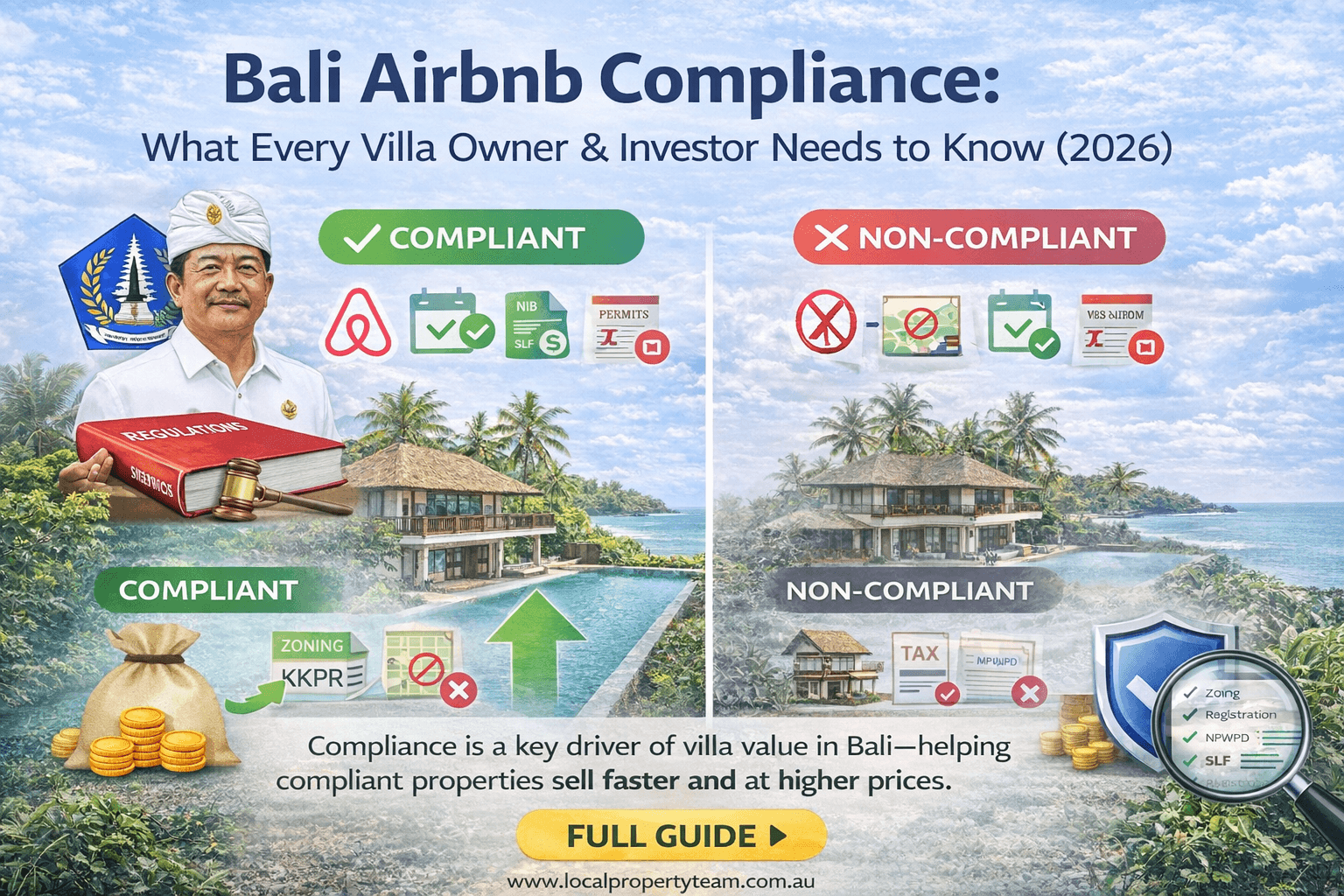
Bali Airbnb Compliance Bali: What Every Villa Owner & Investor Needs to Know (2026)
Bali has introduced stricter Airbnb compliance requirements, and they are already reshaping the villa market. If you own, manage, or plan to invest in a Bali rental property, understanding these rules is now essential not only for legal operation but also for protecting property value and resale potential.
At the core of Airbnb compliance is confirming that your villa is legally approved for accommodation use. This starts with zoning (KKPR), which must allow KBLI 55-series activities such as villa rental or “rumah kos.” Properties without this zoning approval may face listing restrictions, reduced buyer demand, and increasing regulatory risk as enforcement expands across Bali.
Compliance doesn’t stop at zoning. Villas operating short-term rentals are now expected to align their business registration (NIB), local tax registration (NPWPD), and building approvals (such as SLF). Together, these elements confirm that a property can legally operate as tourist accommodation and generate verified rental income a factor that is becoming a major driver of villa pricing and investor confidence.
One of the most important first steps in Airbnb compliance is confirming your villa’s zoning status through the KKPR (Kesesuaian Kegiatan Pemanfaatan Ruang). This document verifies whether short-term rental or accommodation use is legally permitted at the property address. Many Bali villas were originally approved only for residential use, meaning they cannot legally operate as tourist accommodation without zoning alignment. Investors are now increasingly requesting KKPR confirmation during due diligence, making zoning clarity a critical factor in both acquisition decisions and property valuation.
Beyond zoning, aligning your business registration (NIB) with accommodation KBLI codes such as 55130 (Pondok Wisata) or 55900 (Penyediaan Akomodasi Lainnya) ensures that your rental activity is formally recognised under Indonesian business law. This alignment allows villas to operate transparently within the tourism sector, obtain local tax registration (NPWPD), and integrate with booking platforms that now require proof of legal accommodation status. As compliance becomes standardised, properly registered villas are positioned as secure, income-producing assets rather than informal rental properties.
These regulatory changes are also reshaping buyer behaviour in Bali’s property market. Professional investors, funds, and experienced operators increasingly prioritise compliant villas because they offer lower regulatory risk, clearer income reporting, and smoother resale pathways. Over time, this is creating a two-tier market: compliant villas that function as recognised hospitality assets, and non-compliant properties that carry operational uncertainty. As Bali continues strengthening tourism governance, compliance is expected to become a defining characteristic of premium villa investments across the island.
As regulations tighten, compliant villas are emerging as premium assets. They sell faster, attract more financing options, and appeal to professional buyers seeking secure, income-producing properties. Non-compliant villas, by contrast, face growing uncertainty and downward pricing pressure as the market matures.
If you want to understand the full compliance pathway including zoning checks, KBLI alignment, tax registration, and permits read the complete guide here property our property partner Local Property Team : https://www.localpropertyteam.com.au/air-bnb-compliance-bali
Want to buy a fully compliant Air BnB property browse our villas for sale

Join The Discussion